

A reliable commercial property maintenance plan does more than respond to problems after they occur. Businesses depend on functional buildings, safe work areas, accessible equipment, and well-maintained exterior spaces to support daily operations. When maintenance is handled reactively, small defects can develop into expensive repairs, equipment failures, or interruptions that affect employees, customers, tenants, and vendors.
A proactive approach starts with understanding which systems and areas require regular attention. Some components need scheduled inspections, while others benefit from routine cleaning, monitoring, or professional service. Businesses should also consider how maintenance work will affect operating hours, customer access, inventory, deliveries, and other activities.
Creating a practical maintenance schedule makes these responsibilities easier to organize. By prioritizing recurring inspections, documenting completed work, and responding to early warning signs, property managers and business owners can develop a system that supports the property’s condition and long-term operational needs.
Protect Metal Surfaces From Wear and Corrosion

Metal components throughout a commercial property can face constant exposure to moisture, chemicals, weather, friction, and everyday use. Railings, equipment frames, architectural elements, fixtures, and exterior components may gradually develop scratches, chips, fading, or corrosion. Once protective finishes deteriorate, the underlying material can become more vulnerable to additional damage.
Commercial powder coating can provide a durable finish for appropriate metal components, but maintenance should continue after the coating is applied. Property managers should identify coated surfaces during routine inspections and note changes before deterioration becomes widespread. The appropriate maintenance approach will depend on the material, environment, and type of finish.
A maintenance inspection can include:
- Looking for chips, scratches, bubbling, or peeling.
- Checking areas exposed to standing water or chemicals.
- Cleaning surfaces according to appropriate care requirements.
- Documenting locations where damage repeatedly occurs.
- Scheduling refinishing when protective surfaces become compromised.
Keeping records of treated components can also help businesses plan future projects. If certain areas repeatedly experience damage, managers can investigate whether environmental exposure, equipment contact, or another operational condition is contributing to the problem. The same inspection records can also help maintenance teams determine when routine upkeep should be adjusted to better protect frequently exposed surfaces.
Plan Underground Work Before It Disrupts Operations
Underground infrastructure can be easy to overlook because much of it remains hidden from everyday view. Drainage systems, utility lines, foundations, irrigation components, and other buried features may require work during property improvements or repairs. Digging without adequate planning can damage existing infrastructure or interfere with access to important areas of the facility.
Before scheduling work with a commercial excavation company, property managers should gather available site plans and identify known underground utilities. The project schedule should also account for employee access, customer traffic, deliveries, parking, neighboring properties, and any temporary barriers that may be required.
Important planning considerations include:
- Confirming the location of existing underground infrastructure.
- Identifying areas where vehicles or pedestrians need continued access.
- Establishing a safe staging area for equipment and materials.
- Scheduling disruptive work during appropriate operating periods.
- Planning how excavated areas will be restored.
Post-project restoration should be included in the maintenance plan from the beginning. Depending on the project, this may involve repairing pavement, replacing landscaping, restoring drainage, or addressing other affected surfaces. The completed work should also be documented so future maintenance teams understand what was changed below the surface and where important infrastructure is located.
Keep Building Climate Systems Performing Consistently
Heating, cooling, and ventilation systems directly affect the comfort and usability of commercial spaces. Equipment that operates continuously or serves a large facility can experience substantial wear, making preventive maintenance important. Waiting for a complete system failure can result in uncomfortable conditions, disrupted operations, and emergency service needs.
A commercial HVAC maintenance schedule should account for the type of equipment, building usage, operating conditions, and manufacturer recommendations. Filters, controls, coils, belts, motors, drainage components, and other accessible elements may require regular attention. Property managers should also document recurring temperature complaints because they can reveal developing problems.
A useful maintenance program can include:
- Scheduling seasonal system inspections.
- Replacing or servicing filters at appropriate intervals.
- Monitoring unusual sounds, odors, or performance changes.
- Keeping mechanical areas accessible.
- Recording repairs and recurring equipment problems.
Maintenance records can help managers recognize patterns over time. If the same component repeatedly requires attention, it may be appropriate to evaluate whether a larger repair or equipment replacement should be incorporated into future capital planning.
Organize Electrical Maintenance Around Business Demand

Commercial properties often depend on electrical systems for lighting, computers, security equipment, HVAC equipment, machinery, refrigeration, and other essential functions. As businesses add equipment or change how spaces are used, electrical demand can also change. Maintenance planning should account for those changes rather than treating the electrical system as static.
Commercial electric systems should be evaluated for signs of deterioration, capacity concerns, damaged components, and recurring problems. Electrical work should be performed by appropriately qualified professionals, particularly when repairs or modifications involve panels, wiring, circuits, or other significant components.
Property managers should keep track of:
- Recurring breaker trips or electrical interruptions.
- Damaged outlets, switches, or visible components.
- Lighting problems throughout the facility.
- Equipment that creates unusual electrical demands.
- Completed repairs and system modifications.
Electrical planning should also be coordinated with renovations and equipment installations. A new piece of equipment may require different electrical capacity or connections, so evaluating requirements before installation can help avoid unnecessary delays and unexpected project changes.
Design Maintenance Around Customer-Facing Spaces
Customer-facing areas require maintenance that considers appearance, safety, accessibility, and uninterrupted use. In a commercial retail environment, entrances, sales floors, checkout areas, restrooms, aisles, parking areas, and other public spaces can receive substantial daily traffic. Problems in these areas may be noticed quickly by customers and employees.
Maintenance schedules should therefore distinguish between routine tasks and issues that require immediate attention. A damaged floor surface, malfunctioning door, lighting problem, or blocked walkway may need to be addressed promptly rather than waiting for a scheduled inspection. Managers can also establish simple reporting procedures so employees know how to communicate problems.
Priority areas can include:
- Entrances and frequently used walkways.
- Restrooms and other high-use facilities.
- Customer service and transaction areas.
- Lighting and visible fixtures.
- Exterior approaches and parking areas.
Maintenance work that could interfere with customers should be scheduled strategically when possible. Businesses can also use checklists to help employees identify problems during opening, closing, or routine walkthroughs.
Prevent Equipment Failures From Interrupting Operations
Equipment failures can have consequences beyond the cost of a repair. Businesses that rely on temperature-sensitive inventory, specialized equipment, or continuous operations may experience inventory loss, service interruptions, or significant scheduling problems when essential equipment stops working.
A commercial refrigeration repair service can address refrigeration problems, but property managers should also establish procedures for identifying warning signs early. Temperature changes, unusual sounds, excessive frost, water leaks, and repeated cycling may indicate that equipment requires attention. Employees should know which issues should be reported immediately.
A preventive program can include:
- Monitoring equipment temperatures where appropriate.
- Keeping vents and surrounding areas unobstructed.
- Inspecting seals and accessible components.
- Documenting recurring service problems.
- Establishing emergency contacts and response procedures.
Maintenance records can help determine whether repeated repairs are becoming impractical. Managers should consider equipment age, operating demands, repair history, and business consequences when planning future replacements rather than waiting for a complete failure to force the decision.
Maintain Food Service Waste Systems Before Problems Escalate

Commercial kitchens generate significant amounts of grease and food-related waste, making drainage and waste management an important part of property maintenance. Poor maintenance can contribute to odors, slow drainage, backups, and other operational problems. These issues can become particularly disruptive when they affect food preparation or customer areas.
Commercial grease traps require appropriate maintenance based on the facility’s usage and applicable requirements. Kitchen employees should also understand how daily practices affect the system. Keeping inappropriate materials out of drains can reduce unnecessary strain, while regular inspections can help identify developing issues.
Maintenance procedures should include:
- Establishing a recurring cleaning schedule.
- Monitoring drains for slowdowns or backups.
- Watching for persistent odors.
- Training employees on proper waste disposal.
- Recording cleaning and service dates.
Property managers should adjust maintenance schedules when usage changes. A facility serving substantially more customers may place greater demands on its waste systems than it did previously. Keeping accurate service records can help managers recognize those changes and revise maintenance practices accordingly.
Maintain Small Utility Equipment Used Around the Property
Smaller maintenance equipment can be easy to overlook when businesses focus their attention on major building systems. However, frequently used tools and utility equipment can affect cleaning, landscaping, exterior maintenance, and general property upkeep. Damaged equipment can also create unnecessary water waste or make routine tasks more difficult.
A commercial garden hose, for example, may be used for landscaping, exterior cleaning, maintenance work, or other property tasks. Hoses should be checked periodically for cracks, leaks, worn connections, and deterioration caused by weather or improper storage.
Businesses can improve equipment upkeep by:
- Inspecting hoses and fittings regularly.
- Storing equipment away from unnecessary weather exposure.
- Preventing vehicles or heavy objects from damaging hoses.
- Replacing worn connectors and nozzles.
- Keeping utility equipment in designated locations.
Small maintenance tasks can have a cumulative effect on facility operations. Keeping commonly used equipment organized and functional makes routine property care more efficient while reducing the likelihood that minor failures will interrupt other maintenance activities.
Create Consistent Standards for Facility Cleanliness
Cleanliness is an ongoing maintenance responsibility rather than a task that should only receive attention when a facility looks visibly dirty. High-traffic properties can accumulate dust, debris, spills, and other contaminants quickly, while restrooms, entrances, break areas, and shared spaces may require frequent attention.
Commercial cleaning services can support a structured maintenance plan, particularly when a property has extensive floor space, high occupancy, specialized cleaning requirements, or multiple operating areas. Businesses should establish expectations based on how each part of the property is used rather than applying identical cleaning schedules everywhere.
A cleaning plan can identify:
- High-touch surfaces requiring frequent attention.
- Restrooms and break areas requiring scheduled service.
- Entryways that accumulate dirt and moisture.
- Areas requiring periodic deep cleaning.
- Tasks that should be checked after completion.
Cleaning schedules should also be coordinated with repairs and construction. Dust, debris, and temporary access restrictions can affect ordinary cleaning routines during improvement projects. Clear communication between maintenance personnel and cleaning providers can help keep responsibilities organized as conditions change.
Monitor Hard Surfaces for Safety and Structural Wear
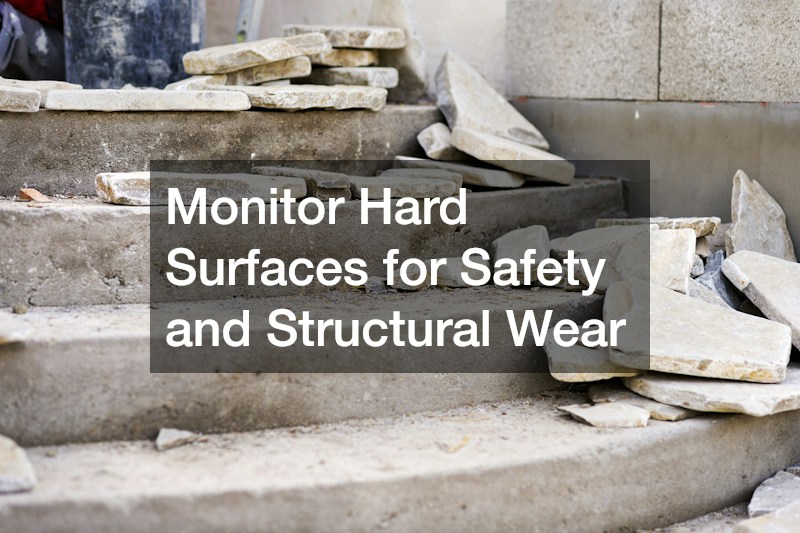
Concrete surfaces can experience significant stress from pedestrians, vehicles, deliveries, weather, and repeated loading. Parking lots, sidewalks, ramps, loading areas, walkways, and building approaches should be inspected regularly for cracks, settlement, surface deterioration, and drainage problems.
Commercial concrete services may be needed when damage becomes extensive or when repairs require specialized equipment and materials. Property managers should not focus solely on how a surface looks. Uneven pavement or deteriorated walking areas can affect accessibility, vehicle movement, deliveries, and general property safety.
Routine inspections should look for:
- Cracks that are widening or spreading.
- Uneven sections along pedestrian routes.
- Areas where water collects after rainfall.
- Deterioration around expansion or control joints.
- Damage in heavily trafficked loading areas.
Maintenance records can help businesses prioritize repairs based on location and severity. A small defect in a rarely used area may require a different response than similar damage along a primary entrance or loading route. Tracking conditions over time also helps managers plan larger projects before deterioration becomes more extensive.
A reliable commercial property maintenance plan should address both major building systems and the smaller components that support everyday operations. Heating and cooling equipment, electrical infrastructure, exterior surfaces, concrete areas, waste systems, cleaning routines, and frequently used equipment all require appropriate attention to remain functional.
The most useful maintenance plans are organized around the actual needs of the property. Managers should establish inspection schedules, document repairs, track recurring problems, and coordinate service work with business operations. This approach makes it easier to identify developing issues before they become major disruptions.
Businesses should also revisit their maintenance plans as property use changes. New equipment, expanded operations, renovations, increased traffic, and changes in occupancy can all create different maintenance demands. Regularly reviewing priorities allows property managers to keep the plan practical and responsive while supporting a cleaner, safer, and more dependable commercial environment.