

Behind the polished glass doors and bright white corridors of modern healthcare centers lies a transformative opportunity for institutional growth and patient care. While public attention often focuses on rising drug prices, staffing challenges, and insurance frameworks, forward-thinking health systems are turning their attention to a powerful engine of clinical success: modernizing technology and physical infrastructure. Across the globe, investing in state-of-the-art facilities, advanced diagnostic tools, and contemporary software frameworks is proving to elevate patient safety, streamline daily operations, and maximize clinical efficiency. By recognizing the immense value of timely infrastructure upgrades, healthcare organizations can transition away from costly reactive maintenance, unlock faster patient recovery times, and build a resilient foundation for long-term clinical excellence.
The Structural Bottleneck in Physical Healthcare Facilities
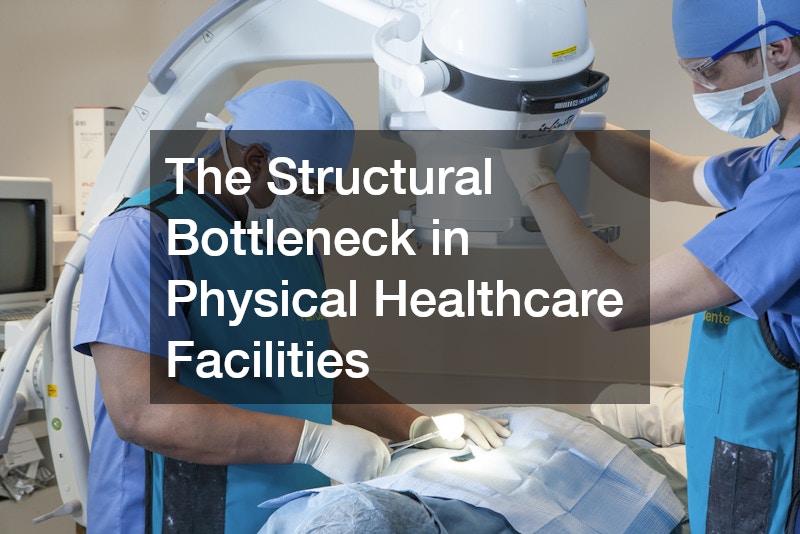
A medical facility is far more than a container for beds and doctors; it is an active mechanical, electrical, and spatial system designed to support continuous clinical intervention. Yet more than half of hospital buildings in developed nations were constructed mid-century, long before the advent of high-density electronic equipment, robotic surgical towers, and stringent climate-control requirements for sterile environments. When older buildings attempt to retrofit cutting-edge diagnostic suites or automated delivery networks, they frequently encounter severe spatial and electrical limitations.
Upgrading these aging environments requires specialized medical construction designed to accommodate reinforced floor loads, high-voltage power feeds, radiation shielding, and sterile air ventilation. Without proactive infrastructure renewal, hospitals are forced to make costly compromises, such as delaying the installation of high-efficiency diagnostic gear or housing state-of-the-art tools in poorly adapted rooms that increase maintenance frequency. Furthermore, retrofitting an active clinical wing disrupts patient throughput and diverts operational capital into emergency repairs rather than planned expansions. The deferred maintenance backlog in hospital infrastructure creates a domino effect: aging HVAC systems increase hospital-acquired infection risks, inadequate electrical layouts limit device density, and rigid room floor plans slow down patient intake and discharge.
Diagnostic Blindspots in Traditional Imaging and Vascular Care
Inaccurate or incomplete diagnostic data represents one of the highest hidden costs in medicine. When clinicians rely on aging diagnostic hardware, subtle structural conditions, early-stage vascular blockages, and subtle mechanical joint defects go undetected, leading to delayed interventions, duplicated testing, and worse long-term outcomes. Standard magnetic resonance imaging machines, for instance, typically require a patient to lie completely flat within a narrow bore. While horizontal imaging remains a staple of traditional radiology, it inherently alters the physical forces exerted on human anatomy. Many musculoskeletal conditions—particularly spinal misalignments, herniated discs, joint instability, and weight-bearing nerve compressions—only reveal their true severity when the body is subjected to natural gravitational pressure. When a patient lies recumbent, the spinal column decompresses and shifted tissues momentarily drift back into neutral positions, effectively masking the precise physical drivers of daily, standing pain.
In these cases, a physician utilizing an upright mri test can evaluate soft tissue and structural alignment while the patient is sitting, standing, or bending, uncovering root causes that traditional lying-down scans routinely miss. Capturing dynamic motion and positional pathology allows clinical teams to construct a far more precise surgical or rehabilitative plan on the very first try. Missing these critical structural details forces patients into months of ineffective physical therapy, unnecessary pharmaceutical management, or repeated imaging rounds, multiplying administrative friction, insurance delays, and overall clinical costs. Beyond the financial drain, delayed diagnostic clarity inflicts a severe personal toll on patients, who must navigate prolonged chronic pain and functional impairment while searching for definitive answers.
Similarly, legacy cardiovascular screening tools often fail to catch microvascular degradation in its early stages, where lifestyle adjustments and targeted therapies are most effective. Conditions like peripheral artery disease affect millions of individuals worldwide, particularly those managing chronic diabetes, systemic inflammation, or long-term hypertension. When diagnostic suites rely on basic pulse-checks or standard blood pressure cuffs rather than advanced digital vascular Doppler, ankle-brachial index automation, and micro-circulatory assessment tools, early arterial blockages remain completely invisible until severe tissue ischemia sets in. The downstream cost of treating advanced arterial damage—which frequently escalates to invasive bypass surgery, emergency endovascular procedures, or lower-limb amputation—dwarfs the upfront investment required for early detection and preventative management. Modernizing diagnostic suites to catch systemic circulatory decay before it reaches a critical, irreversible stage is both an urgent clinical imperative and a primary cost-containment strategy for modern health systems.
The Precision Gap in Ophthalmic and Dental Restorations
In surgical and restorative specialties, tool precision directly correlates with operating time, recovery duration, and complication rates. Legacy instruments require broader incisions, generate excessive thermal energy, and offer limited real-time feedback to the operator, driving up intraoperative risks and post-procedure revisions.
In cataract and anterior segment eye surgery, for example, the shift toward micro-incisional techniques has redefined standard outcomes. Outdated phaco surgical equipment lacks the dynamic fluidic controls and real-time intraocular pressure monitoring found in modern systems. When surgeons use older machinery, the risk of surge fluctuations, corneal endothelial cell loss, and capsule rupture increases significantly. These complications require longer operative times, additional corrective procedures, and extended follow-up visits, consuming valuable room availability and specialist hours. Modern fluidic systems, by contrast, maintain precise chamber stability, allowing surgeons to operate faster, safer, and with drastically reduced recovery times for the patient.
A similar dynamic exists within restorative dentistry and oral surgery. Reconstructing lost dentition used to involve multi-stage, empirical procedures with higher rates of mechanical failure and tissue rejection. Today, placing a dental implant relies heavily on 3D CBCT imaging, guided surgical templates, and specialized osseointegrated materials. When dental clinics operate without integrated digital planning tools and modern surgical handpieces, implant failure rates climb due to misaligned placement or improper bone density evaluation. Re-operating on a failed implant entails bone grafting, soft tissue reconstruction, and months of corrective care—an expensive burden that could be entirely avoided through upfront investment in guided surgical technologies.
Workforce Stagnation and the Skill Transition Deficit

Acquiring modern medical hardware is only half the battle; ensuring the clinical workforce can operate it safely and efficiently is equally critical. In many practice environments, advanced devices sit underutilized or cause accidental injury because staff training programs have not kept pace with technology deployment. The proliferation of energy-based devices in dermatology, plastic surgery, and non-invasive therapeutics highlights this ongoing challenge.
When a clinic or outpatient center acquires advanced laser systems for tissue ablation, scar revision, or vascular treatments, clinical staff must undergo a comprehensive laser training class to master beam physics, skin type classification, wavelength selection, and emergency stop protocols. Without structured, certified training, operators risk causing thermal burns, permanent hyperpigmentation, or ocular injuries—outcomes that lead to liability claims, regulatory fines, and damaged institutional reputations. Furthermore, undertrained staff work more slowly and cautiously, underutilizing high-cost assets that were purchased to boost clinical throughput. Modern healthcare management must recognize that technical education is an inseparable component of infrastructure investment; hardware without comprehensive staff certification is a financial liability waiting to manifest.
Specialized Pharmaceutical Bottlenecks and Custom Care Failures
Pharmaceutical delivery systems are another critical area where legacy practices drive up systemic costs. Commercial mass-manufacturing produces standardized drug dosages and delivery mechanisms that work well for the average patient, but fail to serve individuals with complex allergies, rare genetic conditions, pediatric needs, or specialized hormone requirements.
When a health system lacks seamless integration with a certified compound pharmacy, clinicians are forced to rely on off-the-shelf formulations that may cause adverse reactions, poor compliance, or sub-optimal therapeutic results. Custom compounding allows pharmacists to alter dosage forms, remove problematic dyes or fillers, combine multiple medications into a single dose, or formulate specialized topical gels for localized pain management. In hospital and outpatient settings, having rapid access to custom-formulated medications reduces hospital readmission rates, prevents adverse drug events, and improves compliance among vulnerable patient populations. Outdated pharmaceutical logistics that ignore custom compounding force patients into one-size-fits-all treatments, generating downstream costs through prolonged illness and emergency intervention.
Palliative Care and Behavioral Health Vulnerabilities
The human and financial toll of legacy infrastructure is particularly pronounced in long-term care, mental health, and end-of-life care facilities. These sectors are frequently underfunded relative to acute-care surgical hospitals, resulting in physical environments and tracking systems that feel more like institutions than healing spaces.
In behavioral health, managing chronic substance dependency requires data-driven, personalized recovery environments that integrate continuous biometric monitoring, digital behavioral tracking, and specialized therapy spaces. Outdated addiction treatment centers often operate in repurposed residential or administrative buildings that lack appropriate safety features, quiet sensory rooms, and integrated telehealth capabilities. This physical and technological shortfall contributes to higher patient drop-out rates, elevated relapse statistics, and frequent emergency room visits during acute crises. Transforming these environments with modern safety architecture and digital patient-monitoring networks creates a stabilized environment essential for sustained recovery.
Similarly, the quality of care in a hospice facility is intimately tied to its underlying technology and structural design. Palliative care requires an delicate balance between intensive medical management—such as continuous pain medication delivery and oxygen therapy—and a peaceful, non-institutional atmosphere. Legacy palliative care wards often feature noisy mechanical beds, intrusive monitoring alarms, and poor acoustic insulation that disrupt sleep and heighten patient agitation. Modernizing these spaces with silent ambient monitoring, automated pressure-relieving mattresses, smart climate controls, and integrated family suites reduces acute distress for patients and simplifies the caregiving duties of nursing staff. Investing in compassionate, tech-enabled palliative environments allows care teams to focus on dignity and pain relief rather than constantly troubleshooting mechanical systems.
Veterinary Emergency Care Under Systemic Strain
The challenges of outdated technology are not confined to human healthcare. Veterinary medicine—particularly specialized emergency care—faces identical structural pressures. Modern pet owners view their animals as core family members and increasingly demand diagnostic and surgical interventions comparable to human medical standards.
When a critical animal patient arrives at an urgent veterinary care center, clinical teams face extreme time constraints. Emergency veterinary clinicians must rapidly diagnose internal hemorrhaging, toxic ingestions, acute trauma, or organ failure without the benefit of verbal feedback from the patient. When these facilities rely on legacy x-ray units, manual blood analyzers, or basic fluid pumps, diagnostic turnaround times stretch from minutes to hours. A delay in obtaining accurate blood panels or ultrasound imagery can lead to rapid deterioration or irreversible shock. Furthermore, outdated clinical facilities lack designated isolation wards, proper anesthesia monitoring stations, and emergency surgical suites, forcing staff to improvise during life-threatening procedures. Equipping animal emergency centers with human-grade point-of-care diagnostics, digital radiography, and advanced monitoring devices drastically improves survival rates while maximizing staff productivity during high-volume triage periods.
Modernization Frameworks for Sustainable Medical Architecture
Overcoming the hidden costs of legacy technology requires a fundamental shift in how healthcare leaders allocate capital. Rather than viewing equipment purchases as periodic, isolated expenses triggered by complete machine failure, institutions must adopt a lifecycle management strategy that accounts for total operational impact.
To establish this strategy, health systems must regularly conduct proactive technology audits on their hardware, software, and physical assets. This allows leadership to identify impending end-of-life dates, rising maintenance fees, and operational bottlenecks long before they cause clinical failures. Alongside these audits, new facility construction and renovation projects should prioritize modular spatial design, incorporating flexible floor plans with expandable utility corridors so future generations of diagnostic and surgical tools can be integrated without requiring full-scale structural demolition.
Capital allocation must also account for human resources by embedding integrated staff education directly into every major purchase. Every capital expenditure for advanced clinical machinery should include dedicated funding for staff certification and ongoing skill assessments, ensuring new capabilities translate directly into improved clinical speed and patient safety. Institutions can further optimize capital deployment through cross-disciplinary technology sharing, establishing centralized diagnostic and therapeutic hubs—such as shared specialized imaging suites or regional custom pharmacy networks—to reduce individual facility duplication while maintaining broad access.
Finally, health systems can protect their infrastructure through predictive maintenance ecosystems. By transitioning from reactive repairs to Internet of Things (IoT)-enabled monitoring, facility managers can service vital HVAC, surgical, and diagnostic equipment during planned downtime, eliminating catastrophic mid-procedure breakdowns.
Continuing to operate within the constraints of obsolete technology and aging facilities is an expensive gamble. While the upfront price tag of modernizing clinical architecture and diagnostic machinery can appear daunting, it is far exceeded by the cumulative, quiet drain of equipment downtime, diagnostic errors, extended patient stays, and staff burnout. By investing strategically in dynamic physical infrastructure, high-precision surgical instruments, tailored pharmaceuticals, and comprehensive workforce training, healthcare organizations can eliminate systemic waste, safeguard their financial future, and deliver the high-quality care that every patient—human or animal—deserves.